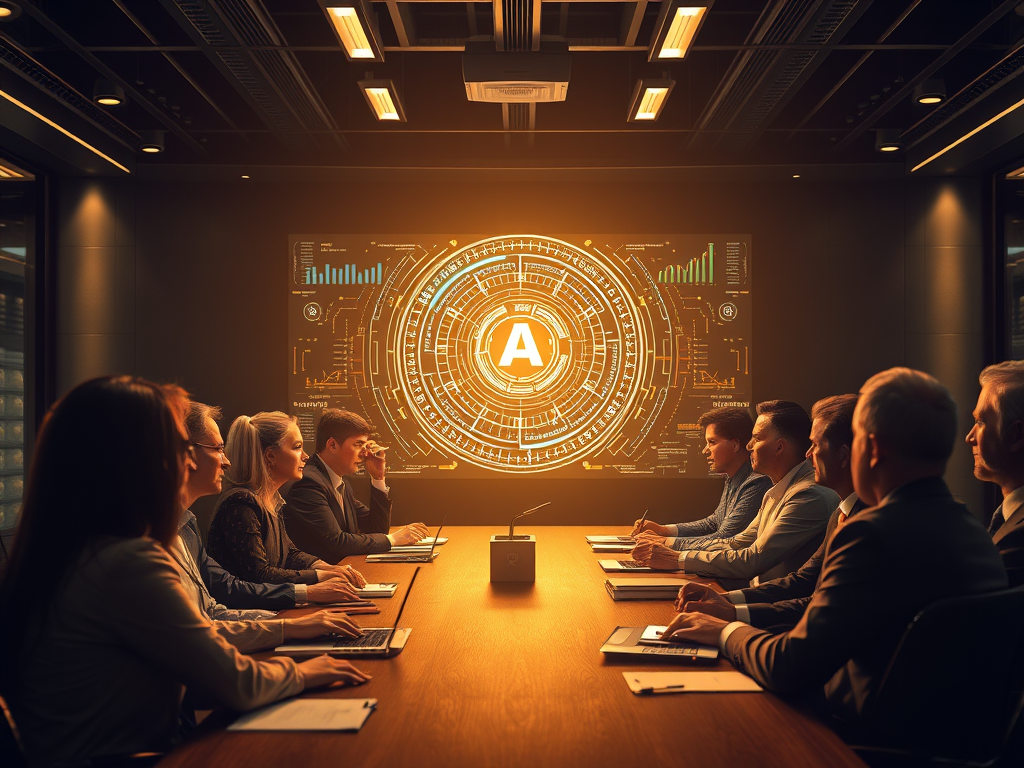
Is Artificial Intelligence (AI) becoming the corporate world’s favourite stimulant (and many individuals if recent research is correct – ‘Generative artificial intelligence addiction syndrome: A new behavioural disorder?‘), the digital crack cocaine of the 21st century?
Everyone is getting on it. From interns to CEOs, everyone wants a hit of insight, a rush of efficiency, a taste of transformation and most of all getting that time back. Therein the last point lies a truth, in an information saturation world AI does legitimately support a win in information distillation and saving us hours of drudgery.
Where once, the buzz in the boardroom came from quarterly earnings or a bold acquisition. Now, it is from watching a chatbot produce a five-year strategy in twelve seconds. “We’ve embedded AI into our operating model,” declares the CEO, pupils dilated with enthusiasm. Translation … We asked it to write the strategy deck and it sounded clever enough to run with it.
The first hit, of course, is free. A harmless chatbot in marketing, a whisper of automation in HR. But tolerance builds quickly. The board demands more, deeper integration, faster delivery and before long AI-driven (dependency) everything. Soon the entire organisation is twitching for the next fix of algorithmic enlightenment.
Meanwhile, the dealers, the Big Tech cartels, know the game. They hand out free tokens, lock in the data and raise the price later. Dependence is not a side effect, it is the business model and your data and interactions feed their engines.
Now here is the part few are willing to confront. Information is now commoditised. What once separated the wise from the foolish, the ability to discern, to interpret, to apply experience and judgement, has been repackaged into prompt-ready output. The world’s knowledge (and disinformation) can be summoned with a keystroke, but judgment cannot. When was the last time you actually checked the sources of your AI augmentation? When information is now free, judgment remains the premium feature. My advice is, do not outsource your last competitive advantage.
Experience, that messy, painful, human apprenticeship of learning through failure, is being perceptively short-circuited. AI delivers the answers without the journey. It promises perfection without the bruises, clarity without the confusion, outcomes without the process of discovery and fixing one’s own mistakes, taking ownership and responsibility in that process. Yet it is precisely those scars, those late-night errors and hard-won lessons, that forge independence of thought and our unique abilities that lay the foundations for true leadership.
In the rush to outsource thinking, we risk breeding a generation of leaders who can no longer distinguish between knowing and understanding. Decisions become derivative. Vision becomes synthetic. The human spark, that blend of intuition, resilience and humility born from experience starts to dim beneath the glow of a prompt window. The PC (Political Correct) ‘ness that has invidiously permeated critical thinking in society will prove to be just an entree to what could manifest.
Corporate ethics departments are, of course, trying to keep up (not helped by the distortion fields of equality, diversity and inclusion politics), issuing responsible AI guidelines often written by the very systems they are meant to regulate. The irony would be funny if it was not so tragic.
So the boardroom hums with a quiet unease. What happens when the models hallucinate? When regulators wake up? When the supply of insight turns out to be just another hallucination of certainty, bred of feeding of its own nonsense (Digital Dementia born of Artificial Intelligence)?
Addiction can feel like progress, until the bill arrives and the hangovers, if not cold-turkey, kicks in.
AI may be brilliant, yes. Revolutionary, certainly, but wisdom still resides in the spaces between mistakes (your ears), not in the shortcuts around them. The companies that will endure and the leaders we can only hope that will emerge are not those who just master AI, but those who retain the human discipline to question it.
We must ensure the future is not be written by machines that think they understand us, but by humans who refuse to forget how to think for themselves, to those who remain master over it and critically of their own independence of thought. When information is cheap, experience becomes priceless and judgment, maybe, the last true luxury of leadership.
The health warning on the AI packet perhaps should read – May impair original thought, reduce tolerance for ambiguity and lead to over-confidence in synthetic expertise. Prolonged use may erode judgment. Not a substitute for leadership forged through adversity, accountability, real-world failure or lived experience. Batteries included. Wisdom not included. Experience sold separately.
SIDE EFFECTS MAY INCLUDE – Loss of critical reasoning, executive shortcuts, decreased intellectual resilience, hallucination dependency and a false sense of strategic competence. Do not combine with weak leadership or ungoverned innovation budgets …
Posted on November 8, 2025
0