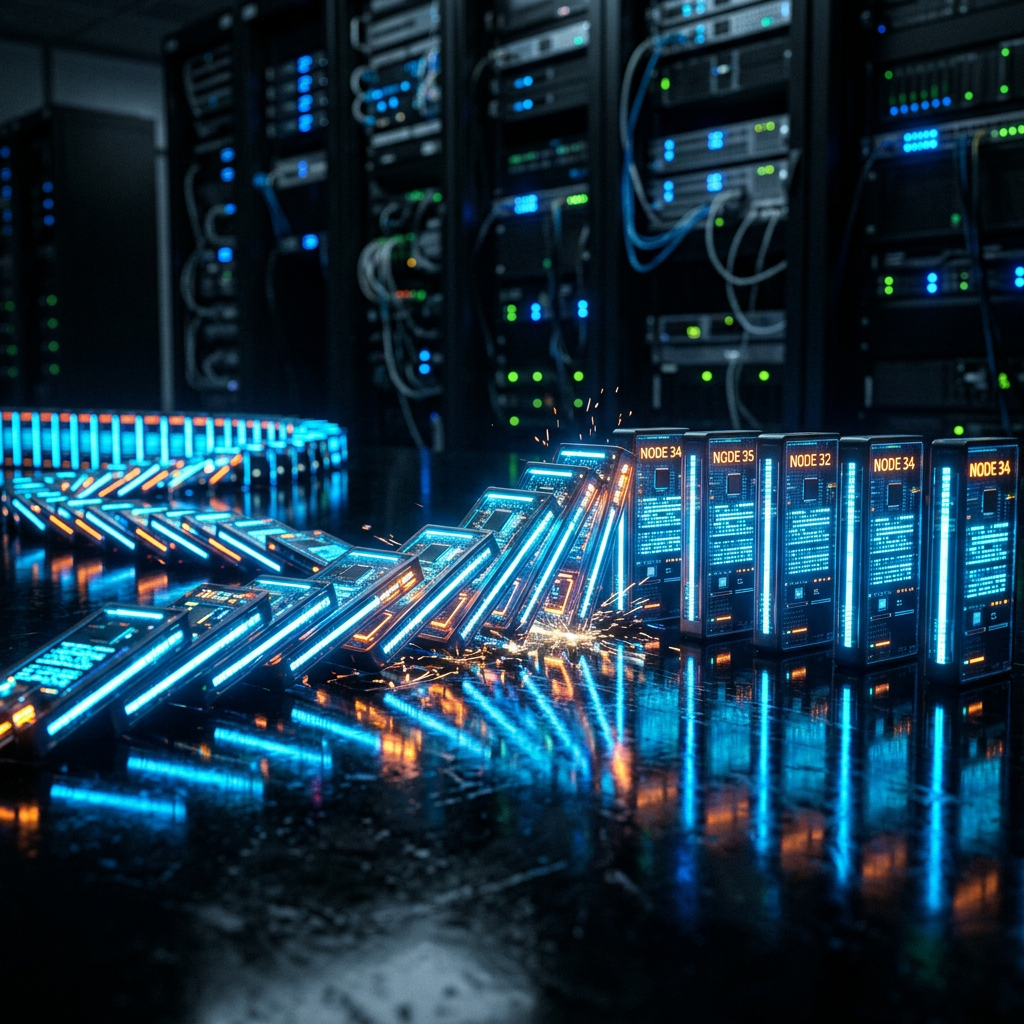
The United States’ decision to restrict foreign access to Anthropic’s most advanced models, such as Anthropics Fable 5, marks an important recognition of AI as a strategic and potentially destabilising capability. Although framed as an export-control and national-security measure, it also signals that frontier AI can no longer be treated as ordinary commercial software.
The deeper implication is that governments increasingly recognise AI’s potential impact on cyber risk, critical infrastructure, economic stability and national security. Once models can identify vulnerabilities, direct autonomous agents and influence interconnected systems, the question is no longer simply whether they are useful, but whether their effects can be contained.
No company, regulator or nation can credibly claim to have this technology fully under control. Access may be restricted and safeguards imposed, but downstream use, emergent behaviour and cascading consequences cannot be fully predicted.
This should perhaps then be seen not only as a geopolitical act, but as an early warning. Frontier AI is becoming systemically important before the world has built the institutions and response mechanisms needed to manage it collectively.
The greatest risk from AI may not be a single model making a catastrophic decision. It may be thousands of AI systems making individually rational decisions that collectively destabilise the wider system.
An AI systemic cascade event occurs when an error, false signal, cyberattack or model failure propagates across interconnected organisations. The initial incident may be relatively contained, but automated responses amplify it at machine speed.
Imagine several banks receiving the same AI-generated warning that a major cloud provider has been compromised. Security agents revoke credentials, isolate workloads and suspend transactions. Fraud systems interpret the disruption as suspicious activity. Trading algorithms detect financial stress and sell affected assets. Credit models reduce exposure, while public AI platforms amplify rumours and synthetic evidence.
Each system may be functioning as designed. Yet together, their actions create the crisis they were attempting to prevent.
AI makes this risk more significant because organisations increasingly depend on the same foundation models, cloud providers, datasets and software components. Similar systems trained on similar information may reach similar conclusions. This creates correlated behaviour, much like financial institutions simultaneously selling the same assets during a market panic.
The introduction of autonomous agents raises the stakes further. AI is moving from recommending decisions to executing transactions, changing infrastructure, deploying code and interacting with other agents. Traditional governance processes may be unable to intervene quickly enough once a cascade begins.
Boards must therefore look beyond whether an individual AI model is accurate or compliant. They must understand how AI decisions connect to suppliers, customers, markets and critical infrastructure.
Organisations need machine-speed safeguards: action limits, circuit breakers, independent verification, immutable decision logs and the ability to revoke agent permissions immediately. Critical services must also remain operable without AI.
The central lesson is simple: local optimisation does not guarantee systemic stability.
AI cascade risk needs to be treated as a serious resilience scenario not because catastrophe is inevitable but because increasing automation, concentration and interconnection are creating the conditions in which small failures can rapidly become systemic ones.
Posted on June 13, 2026
0