Industry Regulations and Resilience is one of the primary drivers for the adoption of multi-cloud strategies. Various industries, such as finance, telecoms, healthcare and government sectors, are subject to stringent regulations that mandate robust data protection and disaster recovery measures. For instance, financial institutions must comply with regulations like the General Data Protection Regulation (GDPR) in Europe, which requires organizations to implement adequate safeguards to protect personal data. Similarly, the Health Insurance Portability and Accountability Act (HIPAA) in the United States mandates stringent security measures for handling healthcare data, Financial Conduct Authority (FCA) and Prudential Regulation Authority (PRA) Regulations in the UK and European Union Network and Information Security (NIS) Directive amongst others.
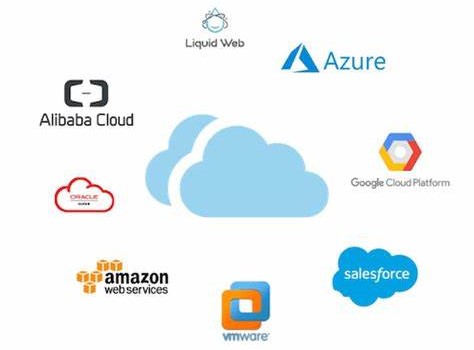
In today’s dynamic digital landscape, the normalization of solutions to run seamlessly across multiple cloud platforms has become crucial. This strategy, often referred to as multi-cloud deployment, ensures that applications and services can operate smoothly on different cloud environments such as AWS, Azure, Google Cloud Platform and others. This approach offers numerous benefits, including increased resilience, flexibility and compliance with industry regulations.
Multi-cloud deployments help organizations meet these regulatory requirements by providing redundancy and minimizing the risk of service disruptions. In the event of a failure in one cloud provider, services can be quickly switched to another provider, ensuring continuous operation and compliance with regulations. This redundancy is vital for maintaining the integrity and availability of critical data and services.
The normalization of solutions across multiple cloud platforms enhances business continuity and disaster recovery capabilities. Organizations can distribute their workloads and data across several clouds, mitigating the risk of a single point of failure. This geographical and infrastructural diversification ensures that an issue in one cloud environment does not cripple the entire system.
For example, during a regional outage of a cloud provider, a multi-cloud strategy allows businesses to continue their operations by leveraging another cloud provider’s infrastructure. This approach significantly reduces downtime and ensures that critical applications remain accessible, thus protecting the organization’s reputation and customer trust.
By designing applications to be cloud-agnostic, organizations can avoid vendor lock-in, where they are tied to a specific provider’s services and pricing structures. This flexibility allows businesses to negotiate better terms and switch providers if necessary without significant reengineering efforts.
Moreover, a multi-cloud approach enables organizations to optimize their workloads by leveraging the strengths of different cloud providers. For instance, an organization might use AWS for its extensive machine learning capabilities while utilizing Google Cloud for its advanced data analytics services. This strategic use of diverse cloud services can lead to cost savings and enhanced performance.
To run across multiple cloud platforms is a mandatory strategy consideration for organizations aiming to enhance resilience, comply with industry regulations, ensure business continuity and maintain flexibility in their cloud deployments. As regulatory demands continue to evolve, the importance of a robust multi-cloud strategy will only grow, making it a fundamental component of modern IT infrastructure.
For the cloud platform vendors this is a commercial event horizon that they have all been dodging as it conflicts with many of their commerical imperatives. There is however an inevitably to provide coexistence services and capabilities to enable solutions to run and load balance across multiple clouds due to increasing demands for resilience, regulatory compliance and vendor neutrality. The hyperscalers will need to adapt their busiens models for the demands of multi-cloud strategies as organisations mitigate risks associated with single-provider dependencies, enhance operational flexibility, and optimize performance and cost-efficiency by leveraging the unique strengths of different cloud providers. Therefore, seamless interoperability and integrated management tools across cloud platforms will become essential features for modern cloud vendors and lays open clear ground for disruption. It would not be the first time a new brand comes out of nowhere to leapfrog the status quo. Just look at how Gen AI is threatening to be Googles search nemisis.
Posted on June 6, 2024
0