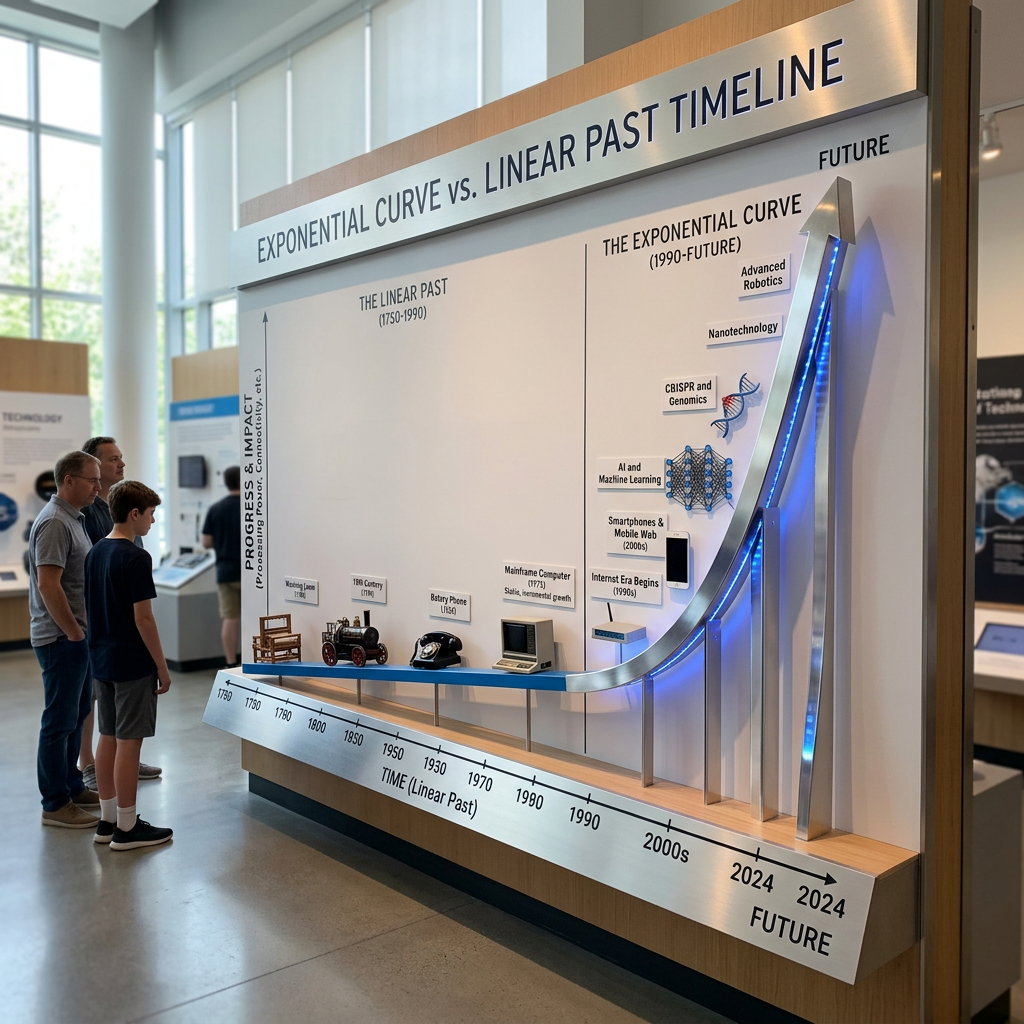
For most of modern history, organisations have operated in a world of largely linear change. Technology evolved in relatively predictable increments, threats emerged at a pace that allowed analysis and response, and strategic planning assumed that tomorrow would resemble today, only slightly different. Artificial intelligence is disrupting that assumption.
The significance of AI is not simply that it is another technological advancement. It is that AI introduces a mechanism for accelerating discovery, decision-making and adaptation at machine speed. This fundamentally alters the rate at which change occurs across the digital economy. Vulnerabilities can be identified faster, attack paths discovered more rapidly, software developed and modified at unprecedented speed, and business models reshaped in months rather than years.
The result is a transition from a world characterised by gradual, predictable change to one increasingly defined by discontinuous leaps and emergent behaviours. Cause and effect become harder to trace. Small innovations can trigger disproportionate impacts. Competitive advantages that once lasted years may evaporate in weeks.
Cybersecurity sits at the centre of this shift. Threat actors gain access to the same acceleration mechanisms as defenders. The challenge is no longer simply managing known risks but operating in an environment where entirely new categories of risk can emerge faster than traditional governance, regulation and organisational processes can adapt.
Compounding the challenge is a well documented human limitation of ‘learned helplessness‘.The human brain evolved to recognise patterns and predict outcomes within relatively stable environments. Psychology has repeatedly demonstrated that when individuals are confronted by prolonged uncertainty, complexity and an inability to predict outcomes, they can experience forms of learned helplessness or cognitive paralysis. Faced with rapid and unpredictable change, people often default to denial, oversimplification or reliance on familiar assumptions. This creates a dangerous mismatch. AI is accelerating the environment at machine speed while human institutions, governance and risk management, resilience structures and the very decision making processes of business remain largely optimised for an industrial age pace of change.
The strategic challenge for organisations is therefore not merely technological. It is adaptive mindsets fit for machine speed evolutionary uncertainty and innovation. Success will increasingly depend on building institutions, operating models and cultures capable of functioning under continuous uncertainty at in compressed timeframes that would be deemed unimaginable today and in real time. Resilience will become less about predicting the future and more about maintaining the capacity to adapt faster than the environment changes.
In an AI driven economy, the organisations that prosper may not be those that know the most, but those that can learn, respond and reconfigure themselves the fastest. The real disruption of AI is not that machines are becoming more intelligent. It is that time itself is becoming compressed.
Posted on July 11, 2026
0