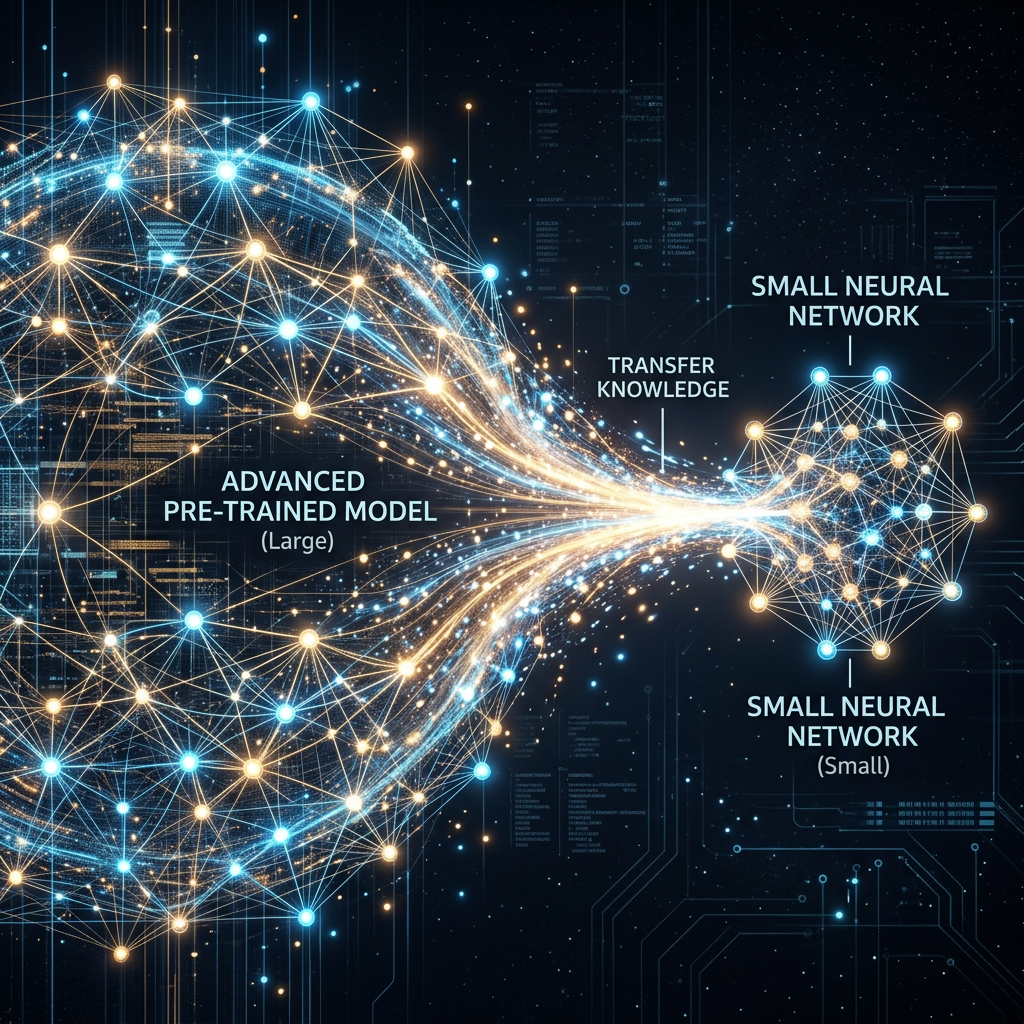
Recent news reports Anthropic alleges that operators linked to Alibaba used nearly 25,000 accounts and 28.8 million interactions with Claude to accelerate competing models towards ‘Mythos-class’ capabilities. The allegation remains contested and has not been independently proven but it illustrates both the appeal and the limitations of large scale model distillation. (Reuters)
Large scale illicit distillation, in summary, offers a competing LLM developer a rapid route to improved capability by systematically querying a stronger model, the developer can generate high quality training examples, identify effective reasoning patterns, improve performance in areas such as coding or analysis and reduce the time needed to close benchmark gaps.
Don’t get me wrong here, used legitimately, with permission, licensed outputs or an internally owned teacher model, distillation is a respectable engineering technique. It can lower inference costs, improve smaller models and accelerate entry into specialist markets. So not all in AI distillation practices is inherently bad.
Irrespective, distillation alone creates limited durable intellectual property. It captures the teacher model’s observable behaviour not the full research capability, proprietary data, training infrastructure, safety engineering and accumulated expertise that produced it. The student model is therefore a compressed snapshot of a competitor’s current position, potentially outdated before extraction and retraining are complete.
The strategic value depends on what happens next. Distilled capability could be converted into proprietary intellectual property (IP) through exclusive domain data, original synthetic data generation, specialist reinforcement learning environments, proprietary evaluations, expert feedback, novel agent workflows and optimisation for particular industries, languages or hardware platforms.
The stronger commercial argument is that defensible IP sits increasingly in the model + system, rather than in model weights alone. Sustainable advantage is created through the surrounding data pipelines, tools, integrations, security controls, evaluation methods, customer workflows and operational knowledge that make the model useful, trustworthy and difficult to replace.
This leaves the imitator on a strategic treadmill spending compute, engineering talent and management attention learning yesterday’s model while the original developer advances. Any apparent saving may be offset by repeated extraction, filtering, retraining and evaluation.
There are also legal, contractual, reputational and market-access risks. Enterprise customers, investors and governments increasingly require credible evidence of model provenance, intellectual-property rights and supply-chain integrity.
Distillation may help a competitor achieve faster parity. It could even provide breathing space in a rapidly moving market. However, beyond a temporary starting point it does not by itself create leadership. Unless copied capability is converted into original research and a differentiated operating system around the model, the developer remains dependent on another organisation’s innovation cycle.
I expect we will be seeing illicit distillation turned on the protagonists. A logical defensive response could expose a controlled honeypot model or place a digital exoskeleton around the principal model, to detect extraction patterns and selectively degrade the value of returned outputs, even redirecting to a lower grade model. Subtle inconsistencies or synthetic artefacts could contaminate collected data, weakening the reliability and generalisability of any student model trained on it. This would reverse the economics of illicit distillation by turning apparent shortcuts into hidden technical debt and competitive disadvantage.
There is also something faintly absurd about any agency claiming strategic technological progress after deploying thousands of false accounts to ask somebody else’s model for the answers. It is industrial espionage recast as research and development, enormous ingenuity applied to proving that the fastest route to the future is to copy yesterday’s homework at machine speed.
Posted on June 28, 2026
0