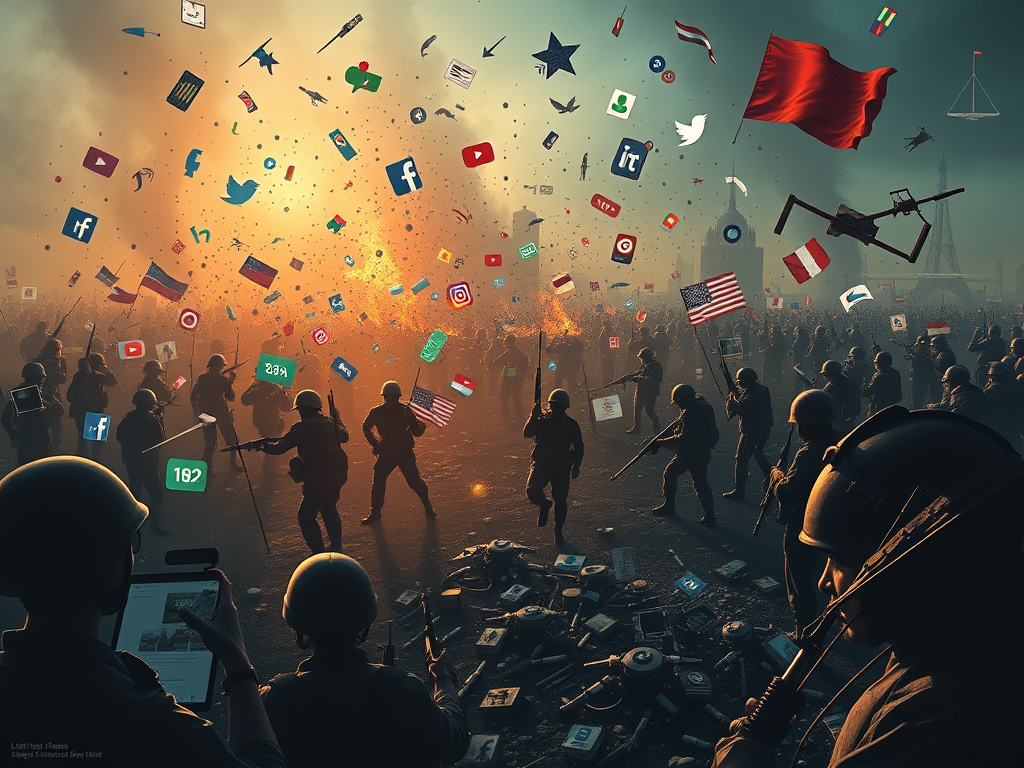
In today’s democracies, facts are no longer neutral. They have become weapons. A statistic pulled from context, a story exaggerated beyond proportion or a meme sharpened into a blade can now be deployed as artillery in political trench warfare. The battlefield is not foreign soil, it is our own timelines, group chats and dinner tables, delivered in Realtime tailored to our individual digital walled gardens and echo chambers.
At the micro level, identity politics acts as the accelerant. Every community, however defined, increasingly sees itself not by what it stands for but by what it stands against. Neighbour against neighbour, tribe against tribe, citizen against citizen. What once might have been minor social friction, a disagreement on policy, a cultural quirk or a lifestyle choice, is now magnified into existential conflict through the digital cognitive hooks we are subliminally being entrapped.
At the macro level, this identity-fuelled division becomes national polarisation. This is where external actors, nation states with every interest in seeing Western democracies stumble, step in. They do not have to manufacture hatred, they just amplify what is already simmering. With bot farms, fake accounts and Artificial Intelligence (AI) algorithmic manipulation, they can take a single local incident and inflate it into a national crisis. The strategy is elegant in its cynicism, let democracies eat themselves alive, just sit back and watch.
This is the hidden hand behind the rise of political popularism. Populist leaders thrive on outrage and outrage today is a commodity in oversupply. Identity politics supplies the spark, disinformation the oxygen and polarisation the roaring blaze delivered through societies digital mediums into our very pliable human cognitive neural networks. It is a feedback loop that corrodes trust in institutions and reduces democratic debate to little more than shouting across barricades and flame wars online.
Yet, the response is strangely muted. For all the warnings from academics, journalists and intelligence agencies, societies appear oddly idle in defending themselves from this digital distorted reality they give mindshare to, devolving the gift of individual critical thinking to adversaries in this very modern cold war. Fact-checking initiatives limp along, social media companies shuffle their policies as they refine their algorithms for greater subscriber addition and citizens shrug as though democracy were an eternal machine that can run without maintenance.
Perhaps the greatest weapon of those who seek to destabilise us is not disinformation itself but our collective laziness in combating it. After all, why worry about truth when there is a new season to binge, a cat meme to share and another tribal skirmish to cheer from the sofa without engaging brain? Worse still our fallibility to our AI engine of choice as some trustworthy Oracle when quite the opposite is increasingly evident to those who exercise critical thinking.
If popularism is a warning symptom, then polarisation is the disease and disinformation its vector. The uncomfortable question is whether democracies can inoculate themselves in time or whether the very freedoms that make them resilient also make them fragile.
Satire aside, to be clear, what is at stake is truth, governments that are accountable to us and the cause of liberty itself.
Posted on September 16, 2025
0