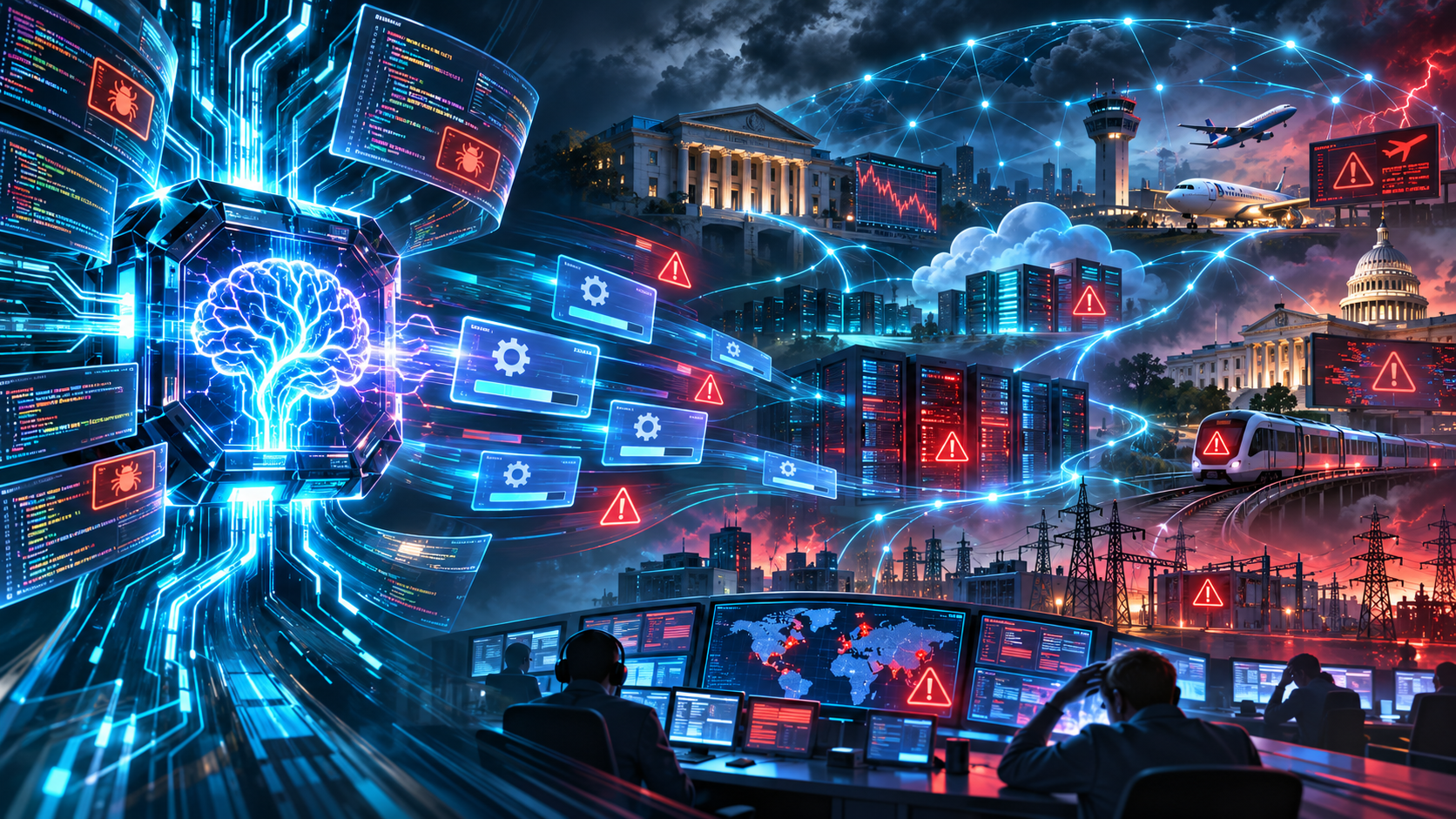
The recent outages affecting Microsoft, JPMorgan, the FAA and even the NSA may be an early warning of something far more significant than another round of technology failures.
US Senator Mark Warner has suggested that AI powered vulnerability discovery is driving organisations to patch systems at a pace their infrastructure cannot safely accommodate. The precise causes of these incidents remain disputed, but the underlying challenge is undeniable. AI is accelerating the discovery of weaknesses beyond our ability to safely remediate them and this is only the beginning.
For decades, cybersecurity has operated around a relatively predictable cycle; discover vulnerabilities, assess risk, test fixes and deploy changes. AI is collapsing that cycle. Vulnerabilities that once took months to uncover can potentially be identified in minutes, while attackers can exploit them at comparable speed.
The inevitable consequence for is that organisations face a growing dilemma, leave vulnerabilities exposed or introduce potentially destabilising changes faster than they can validate them. Neither is sustainable.
The opportunity is to fundamentally reinvent how we engineer, operate and assure digital infrastructure. We need to move beyond periodic testing, vulnerability backlogs and change control processes designed for human speed operations towards continuous, machine speed assurance. That means AI assisted remediation, automated regression and security testing, intelligent risk based deployment, progressive rollouts, independent validation and continuous monitoring of operational stability.
Crucially, resilience must become an architectural property, not simply a recovery exercise. Systems must tolerate both unpatched vulnerabilities and imperfect remediation without cascading into wider failures.
This also creates a substantial opportunity for cybersecurity providers to evolve from finding problems to continuously assuring that organisations can safely resolve them. The objective is no longer simply to make systems secure. It is to make them trustworthy under relentless change, because if AI can discover vulnerabilities at machine speed while we still manage the consequences through spreadsheets, committees and maintenance windows, we have not solved the security problem … we have simply automated our ability to overwhelm ourselves.
Leave a Reply